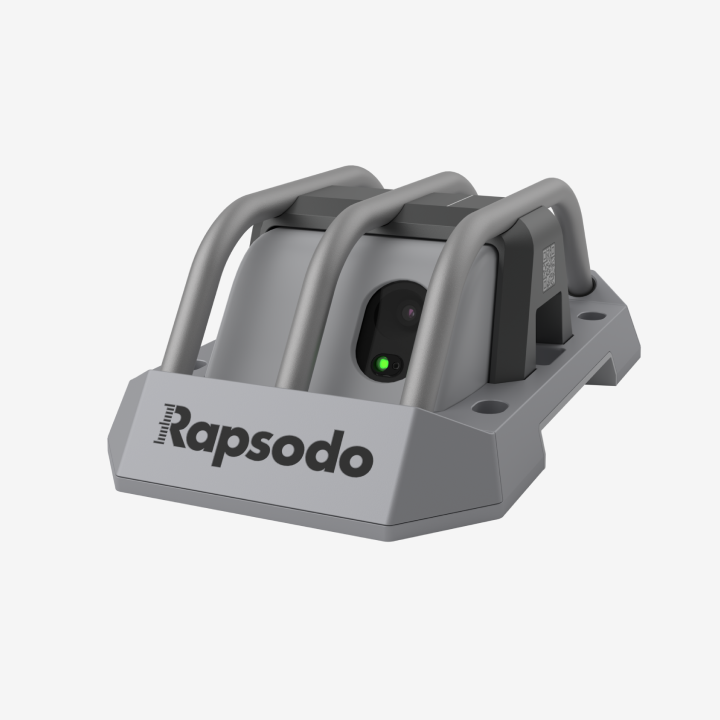
Every pitch should have a purpose. Here is how softball coaches can use objective feedback from PRO 2.0 Softball to plan better sessions, develop complementary pitches, and determine whether the work is translating to competition.
A pitcher can throw 50 pitchers in a bullpen and leave with tired legs, a good sweat, and no clear answer.
Did the grip adjustment improve the pitch?
Was the new movement repeatable, or did it appear once in the middle of an otherwise ordinary session?
Could she command it?
Did the pitch make the rest of her arsenal better?
Most importantly, did it create a different problem for the hitter?
Without a defined objective, a bullpen can become a collection of disconnected repetitions. The pitcher throws. The coach reacts. One pitch draws an excited response. Another misses the target. The bucket eventually empties, and everyone leaves with a general impression of how the session went.
That is activity. It is not necessarily development.
A product bullpen begins somewhere else. It begins with a question. What are we trying to learn, change, or prove today?
Baseline. Plan. Adjust. Retest. Evaluate. Apply.
The goal is not to collect the most data or manufacture one impressive pitch. It is to determine whether a pitcher can produce a useful shape, repeat it, command it, and deploy it in a way that creates the intended competitive result.
That is the difference between throwing a bullpen and building one.
A Bullpen Is Not A Pitch Count
Pitch count provides useful information. It tells a coach how much work an athlete completed and can help manage volume across practices, games, and tournaments.
It does not explain the quality or purpose of that work.
That distinction matters because softball pitching is not the low-stress motion it was once assumed to be. A review of the available biomechanics literature concluded that increased pitch volume, limited rest, fatigue, elevated velocity, and altered mechanics may combine to increase upper-extremity stress in windmill pitchers. (Clinical and Biomechanical Evaluation of the Softball Pitcher)
In one fatigue study, 19 adolescent pitchers averages 99 pitches over five innings. Their velocity declines by an average of 3.4% from the first inning to the last, while researchers documented substantial fatigue in the hips and scapular muscles. (Performance Demands in Softball Pitching)
That does not mean pitchers should avoid bullpens. It means coaches should demand more from each repetition.
If an athlete is going to accumulate meaningful physical load, the session should produce meaningful information.
A stronger bullpen should answer three questions:
1.) What happened? 2.) Can the pitcher repeat it? 3.) What should she train next?
Rapsodo Softball's development workflow move through that exact process: organize the athlete, begin with an intentional session, use immediate feedback, and then review the patter rather than treating each pitch as an isolated event.
The first mistake coaches often make is beginning with every available metric.
The better starting point is one development question.
Establish What The Pitcher Already Does Well
Pitch design is often discussed as if development begins with identifying what an athlete lacks.
She needs a better changeup. She needs more rise. She needs another breaking pitch. She needs more velocity.
Sometimes those assessments are correct. But an effective development plan should not begin by treating the athlete as an unfinished list of deficiencies.
It should begin with her advantage.
What pitch can she throw when the count is full?
What shape can she reproduce?
What can she command to both sides of the plate?
Which pitch creates the least comfortable swings?
Which one still works when the athlete is tired, under pressure, or facing a hitter for the third time?
Rapsodo's framework places the pitcher's foundation at the center of the arsenal, surrounded by five considerations:
Her most consistent pitch
Most commandable pitch
Best movement profile
Most trusted competitive pitch
Pitch that creates the strongest hitter response
That approach is supported by what researchers continue to find about the individual nature of softball pitcher.
A 2026 study of 90 high school and college pitchers found that lower-body and center-of-mass variables explained 57% of the variance in fastball velocity. Peak vertical center-of-mass velocity showed the strongest relationship with pitch speed, followed by forward center-of-mass velocity and ground-reaction forces. (Jump IP, Zappa RM, Friesen KB, Talmage JL, Fava AW, Oliver GD. Impact of the Lower Body on Softball Pitching Velocity.)
Other studies have found relationships between pitch velocity and elbow or wrist angular velocity, while body composition and segment size can also influence mechanics at release.
The point is not that every coach needs a biomechanics laboratory.
It is that pitchers are not interchangeable.
A movement patter or grip that helps one athlete may not fit another athlete's body, delivery, or competitive identity. Development should build outward from what the pitcher can already execute, not force every athlete toward the same idealized profile.
Plan The Bullpen Around One Question
Once the baseline is clear, the coach can define the purpose of the session.
Not:
"We are working on changeups today."
Instead:
"Can we create more separation between the changeup and fastball without changing the release profile?"
That question is specific enough to shape the session
The coach can identify the relevant variables:
Velocity difference
Movement difference
Spin direction
Release heigh and extension
Location
Visual path
Then the coach can decide how the pitcher will test the question.
She might begin by alternating fastballs and changeups in a controlled location. She could then throw them in sequence before moving into competitive counts. Afterward, the coach can compare the average, range, and consistency of both pitches.
Looking at a comparison between fastballs and changeups, the fastball sits at 66 to 68 MPH, while the changeup sits at 64 to 66 MPH. Their rise, run, release profile, and visual path are also similar. Despite having different names, the two pitches create very little separation from the hitter's perspective.
That is a far more useful diagnosis than simply saying the athlete needs a "better changeup."
The session now has a clear problem to solve.
Should the pitcher reduce the changeup's velocity?
Create a different movement direction?
Change its finish location?
Preserve the tunnel longer before creating late separation?
Without a defined questions, the coach receives numbers. With a defined question, the coach receives evidence.
Turn The Plan Into A Scripted Session
Defining the development question is the first step. The next is building a bullpen that can answer it.
Rapsodo Softball’s Scripted Sessions feature allows coaches to create an intentional sequence before the pitcher begins throwing. Rather than collecting a group of pitches and reviewing them afterward, coaches can determine the pitch types, target zones, order and goals of the session in advance.
That changes the bullpen from an open-ended workout into a controlled test.
A coach working to improve changeup separation, for example, could build a session that alternates fastballs and changeups to the same location. The pitcher is no longer throwing both pitches randomly. She is testing whether they share a convincing early path before separating through velocity, movement or finish.
A Scripted Session can be built around questions such as:
Can the pitcher command her rise ball in the upper third of the zone?
Can she maintain fastball intent while reducing changeup velocity?
Can she locate her drop ball below the zone without losing movement?
Can she execute two complementary pitches from a consistent release window?
Can she repeat a new adjustment over an entire pitch group?
The feature guides the athlete through the planned sequence, tracks successful and unsuccessful attempts and produces a post-session summary. Coaches can then review whether the pitcher accomplished the intended task instead of relying only on memory or the best-looking pitch of the day. The presentation frames this clearly: do not throw pitches and search for meaning afterward. Build the session around the question that needs to be answered.
A practical Scripted Session example
Development question:
Can the pitcher create more separation between her fastball and changeup?
Session design:
Throw five fastballs to establish the current baseline.
Throw five changeups to the same target.
Alternate fastball and changeup for two additional rounds.
Compare velocity, movement, spin direction and release profile.
Review the average, range and repeatability of each pitch.
Decide whether the changeup creates a meaningfully different problem.
The purpose is not simply to complete the script.
It is to control the environment closely enough that the coach can trust the result.
A better bullpen does not just organize pitches. It organizes the learning process.
Find The Overlap And The Gaps
Pitch tunneling is valuable because multiple pitches can travel through a similar early window before separating late.
But tunneling and redundancy are not the same thing.
A useful tunnel creates uncertainty. The pitches appear similar long enough to delay recognition, then differ in speed, movement, or finish.
Too much overlap gives the hitter one problem to solve instead of two.
To evaluate that distinction, coaches should compare:
Velocity
Horizontal and vertical movement
Spin direction
Release height and extension
Location
Visual path
The example between fastball and changeup illustrates the danger. The release profiles are nearly identical, which can be an advantage. But the small velocity gap and similar movement profiles mean the pitches may remain too alike throughout the entire flight. The hitter sees the same initial window without receiving a meaningfully different finish.
That leaves the coach with a practical set of questions:
Does the pitch change the hitter's timing?
Does it move the eyes or barrel to a different plane?
Does it finish far enough from the primary pitch?
Does it create a different swing decision?
Would the hitter describe it as a different problem?
The goal is not maximum separation in every category. A good changeup may intentionally mirror the fastball's release and early path. The important question is whether it eventually creates enough different to fulfill its job.
Change One Variable At A Time
Pitch design can become messy quickly.
A pitcher changes her grip, finger pressure, wrist position, seam orientation, target, and intent. The next pitch moves differently.
Which adjustment caused it?
Nobody knows.
The result may be better, but the process is difficult to repeat because too many variables changed at once.
The more reliable approach resembles a controlled experiment:
1.) Establish the baseline. 2.) Change one variable. 3.) Retest under similar conditions. 4.) Compare the results. 5.) Keep, modify, or discard the adjustment.
That sequence is a central part of the pitch design process. Potential variables included grip, finger pressure, seam orientation, wrist position, release intent, target, and velocity intent.
Suppose a pitcher wants more depth on her drop ball.
The coach might begin by changing finger pressure while keeping the grip, target, and intent as consistent as possible. After several pitches, they can compare the new group with the baseline.
Did the average vertical movement change?
Did the range tighten or widen?
Was velocity maintained?
Did the pitcher retain command?
If the coach changes four variables and received one good pitch, the athlete has a highlight.
If the coach changes one variable and see a repeatable patter, the athlete has a potential solution.
Evaluate The Pattern, Not The Best Pitch
The best pitch in a bullpen is so often the most dangerous one to overvalue.
It is memorable. It produces the cleanest movement visualization and the loudest reaction. It may also be the least representative pitch the athlete threw all day.
Development should not be driven by outliers.
The more important evidence is found in the distribution:
What was the average?
How wide was the range?
How frequently did the pitcher reproduce the intended shape?
Could she command it?
Did the adjustment hold at higher intent?
Did it improve the arsenal or merely create a prettier individual pitch?
Ask these four questions:
Did the pitch change?
Can the pitcher repeat it?
Can she command it?
Does it improve the arsenal?
That standard matters because performance depends on repeatability.
A single rise ball with exceptional vertical movement does not help much if the next four pitches are noncompetitive. A changeup with ideal speed separation is not useful if the pitcher slows her arm enough for hitters to recognize it immediately.
The goal is not one great pitch.
It is a pitch that survives variation, fatigue, pressure, and competition.
Do not chase the best rep. Trust the pattern.
From Pitch Design To Competitive Proof With Live-on-Live
A bullpen can reveal pitch shape, velocity, release consistency, repeatability and command.
But a clean data profile does not automatically mean a pitch is effective.
The pitcher eventually needs a hitter.
Rapsodo Softball’s Live-on-Live feature connects pitching data and hitting outcomes within the same session. Coaches can evaluate the pitch that was thrown and the result it created, including whether the hitter recognized it, made barrel contact, chased, took the pitch or produced weak or hard contact.
That connection matters because pitch design does not end when the ball moves correctly.
It ends when the pitch creates the result the coach and pitcher intended.
A drop ball may show strong downward movement in a bullpen, but Live-on-Live can reveal whether hitters are actually swinging over it, beating it into the ground or recognizing it early and taking it below the zone.
A changeup may create the desired velocity gap, but the hitter’s response could show that the pitch is being identified too early.
A rise ball may produce strong vertical separation, but if hitters repeatedly square it up in predictable counts, the problem may be sequencing rather than movement.
Live-on-Live adds several competitive layers to the evaluation:
Pitch recognition
Barrel contact
Swing decisions
Sequencing effectiveness
Competitive-count execution
Batted-ball outcomes
The presentation summarizes the distinction well: the bullpen shows shape, repeatability, command and game-intensity execution. The hitter completes the evaluation by showing how the pitch actually plays.
A three-round Live-on-Live progression
Coaches can progress from controlled testing to competitive evaluation.
Round 1: Known Pitch
Tell the hitter what is coming.
This isolates raw pitch quality and location. Can the pitcher execute the pitch even when the hitter is prepared for it?
Round 2: Mixed Arsenal
The hitter no longer knows which pitch is coming.
Now the coach can evaluate recognition, separation and sequencing. Do the pitches create different decisions, or do they blend into the same visual problem?
Round 3: Competitive Counts
Add game situations, counts and intended outcomes.
The pitcher must now choose and execute pitches with competitive intent. The coach can evaluate whether the arsenal holds up when the task becomes less predictable and more game-like.
This controlled-to-competitive progression is part of the presentation’s recommended Live-on-Live process.
Scripted Sessions help build the test. Live-on-Live helps prove whether the answer works against a hitter.
Score The Result, Not Just The Pitch
Live-on-Live also allows coaches to define success more broadly than strikeouts.
A successful pitch may produce:
A swing and miss
Weak contact
An executed location
A desired batted-ball direction
An effective sequence
A competitive take that sets up the next pitch
A negative result may include:
Hard contact
A missed target
Predictable sequencing
A noncompetitive pitch
This is important because every pitch has a different job.
If the goal of a drop ball is to create a ground ball, weak contact on the ground should be scored as a success. If the goal of a changeup is to disrupt timing and set up the next pitch, an off-balance foul ball may still represent a productive result.
Rapsodo’s presentation recommends evaluating every pitch and scoring the quality of the competitive outcome, not simply counting strikeouts.
The question becomes more useful than “Was it a strike?” Did the pitch do its job?
Turn Live-on-Live Results Into The Next Scripted Session
The strongest development process does not end with a bullpen or a competitive round.
It becomes a feedback loop.
Rapsodo Softball connects the pitch characteristic, the hitter’s response and the coach’s finding to the next Scripted Session:
Good movement, poor location The pitch shape is effective, but command limits its competitive value. Next session: Preserve the movement profile while adding tighter location constraints.
Changeup recognized early The velocity difference may be sufficient, but the delivery or visual presentation gives the pitch away. Next session: Compare release profile, arm speed and early trajectory with the fastball.
Breaking pitch creates weak contact below the zone The pitch has found a clear competitive role. Next session: Test whether the pitcher can command it consistently in two-strike sequences.
Pitch works only after the fastball The pitch may be useful, but its effectiveness depends on sequencing. Next session: Build scripts that test the pitch in multiple count and sequence combinations.
This is the Live-on-Live feedback loop, where hitter response creates the coaching finding that determines the next planned session. That is how a bullpen becomes part of a larger development system.
One session identifies the question.
Scripted Sessions organize the test.
Live-on-Live provides competitive evidence.
The result determines what happens next.
Build The Bullpen. Test The Arsenal. Close The Loop.
A productive bullpen is not a random collection of pitches.
It is a controlled development environment where coaches can:
Use the Rapsodo Softball app to understand the pitcher’s current profile
Create an intentional bullpen with Scripted Sessions
Build pitches that complement one another
Test the arsenal against hitters with Live-on-Live
Connect pitch characteristics to actual hitter responses
Use those results to determine the next development priority
The complete process is: See → Plan → Design → Test → Adjust
The technology measures what happened.
Scripted Sessions give the work structure.
Live-on-Live shows whether the pitch creates the intended result.
The coach turns that information into the next decision.
The best bullpens do not simply produce more repetitions. They produce clearer answers, better-connected arsenals and pitchers who understand exactly what each pitch is supposed to accomplish.
Stop throwing bullpens. Start building them.
Build A Better Bullpen
Use Rapsodo Softball Scripted Sessions to plan intentional work, then use Live-on-Live to see how the arsenal performs against hitters and turn the results into the next step forward.
Ready to add PRO 2.0 Softball to your player development program? Visit our website or email sales@rapsodo.com to learn more.
Related Articles.
PRO 2.0
Stop Throwing Bullpens. Start Building Them.
Every pitch should have a purpose. Here is how softball coaches can use objective feedback from PRO 2.0...
With an unwavering passion for the game and
data-driven insights, we're here to inspire and elevate your
Softball journey through articles that help
you find improvement and excellence.